
Devadhwani

Devadhwani
Project Overview
Founder’s Note
Devadhwani did not originate as a conventional product; it emerged from a fundamental question: how can temples manage their daily operations with greater clarity, accountability, and dignity—without disrupting sacred traditions or adding complexity to the responsibilities of those who serve them? Today, many temples continue to rely on manual systems to manage pooja bookings, communicate with devotees, track expenses, and prepare reports, making administration time-consuming and error-prone. Devadhwani is Prajnja’s thoughtful response to this challenge—a carefully designed technological framework that supports temple administration with simplicity and respect. Rather than imposing change, it aligns with existing practices, empowering temples to operate more transparently and efficiently while preserving the sanctity and rhythm of their traditions.
The Reality Inside Temples Today
How Devadhwani Works
Devadhwani is designed with the temple—not the individual—as the core unit of the system. Each temple is formally registered within the platform and anchored to a single official mobile number, which functions as the Super Administrator account. This approach mirrors real-world temple governance, where authority and responsibility rest with the institution rather than with individuals. By aligning digital structure with existing administrative practices, Devadhwani ensures clarity of ownership, accountability, and seamless adoption without disrupting established workflows.
Temple Administration Roles and Daily Operations
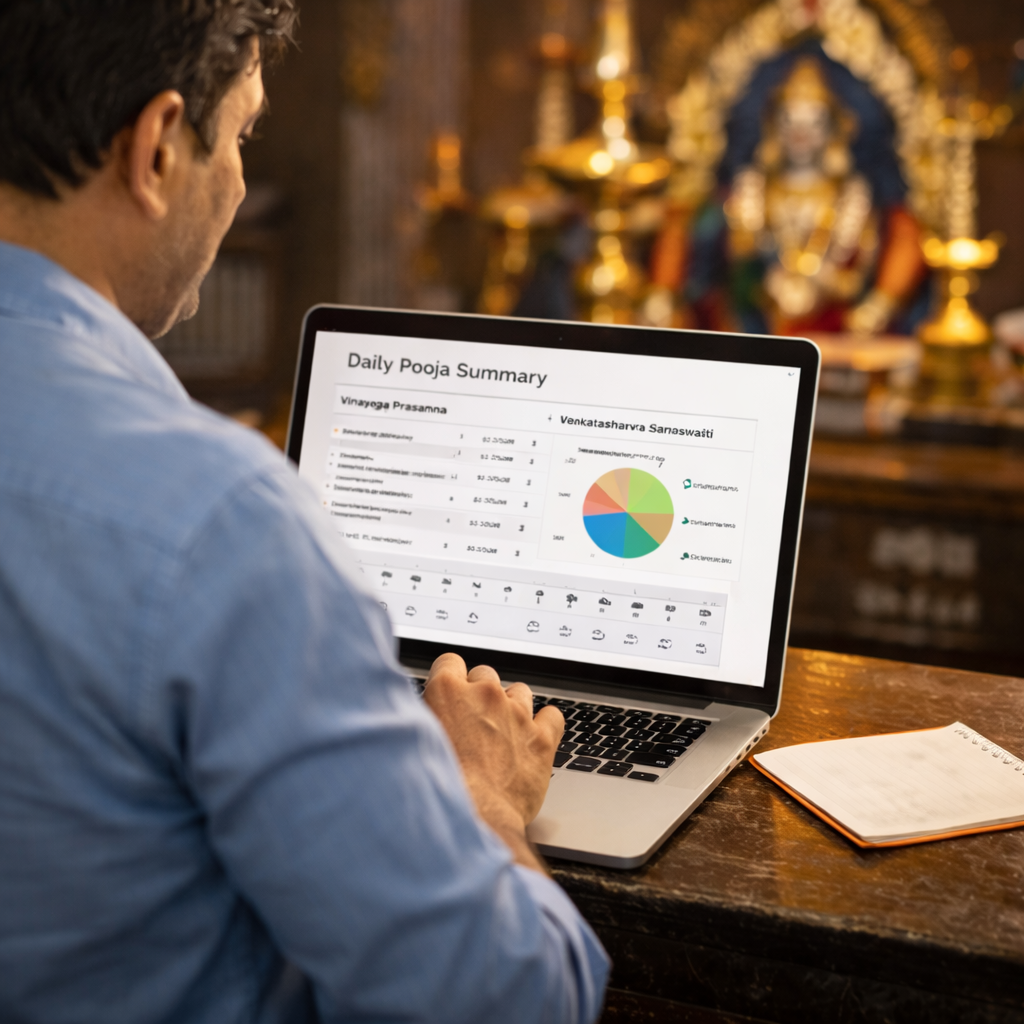
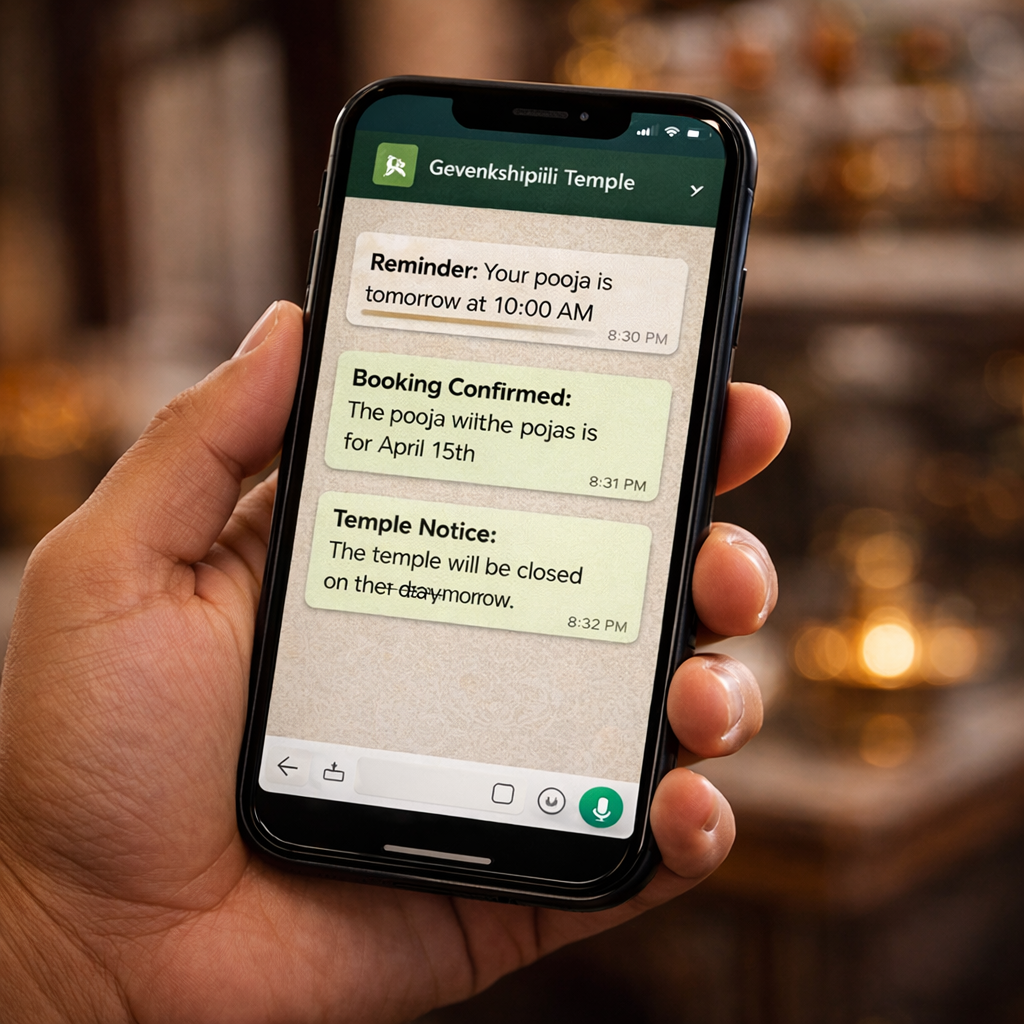
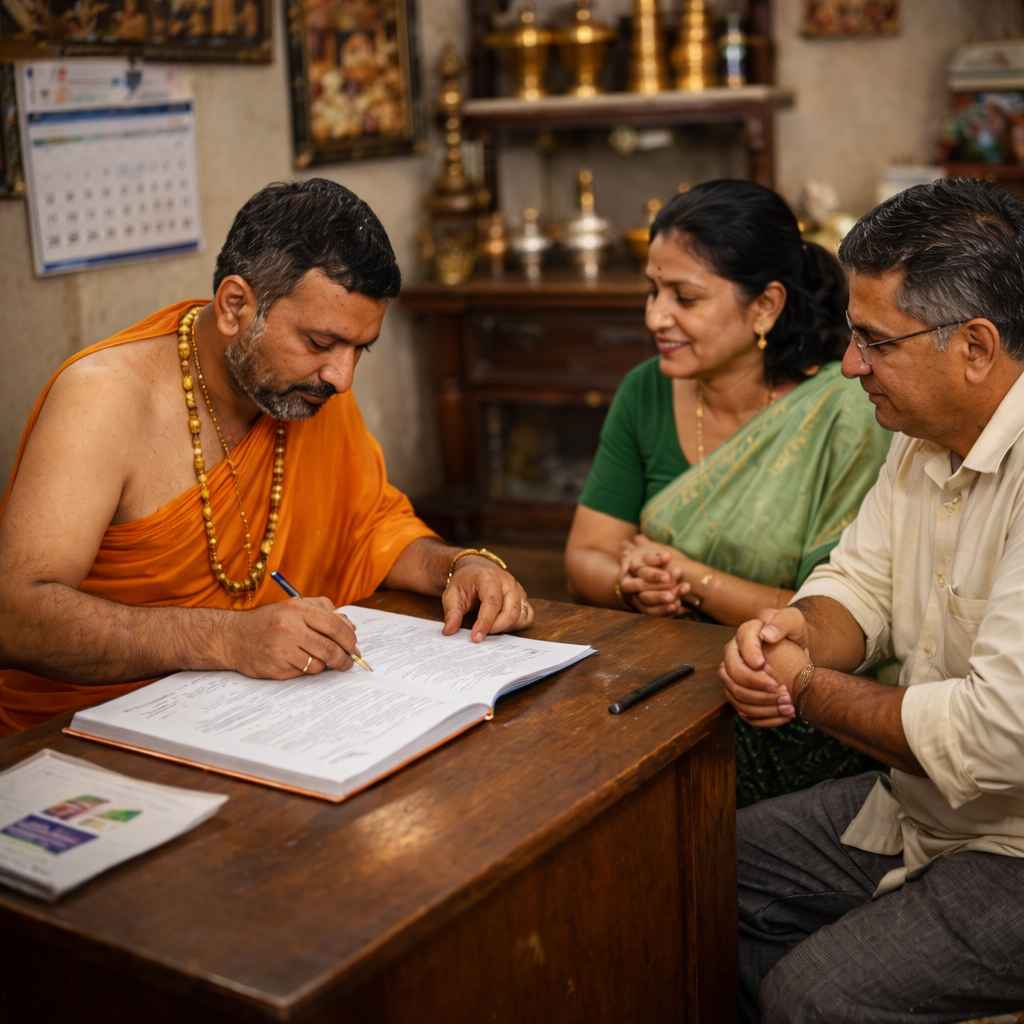
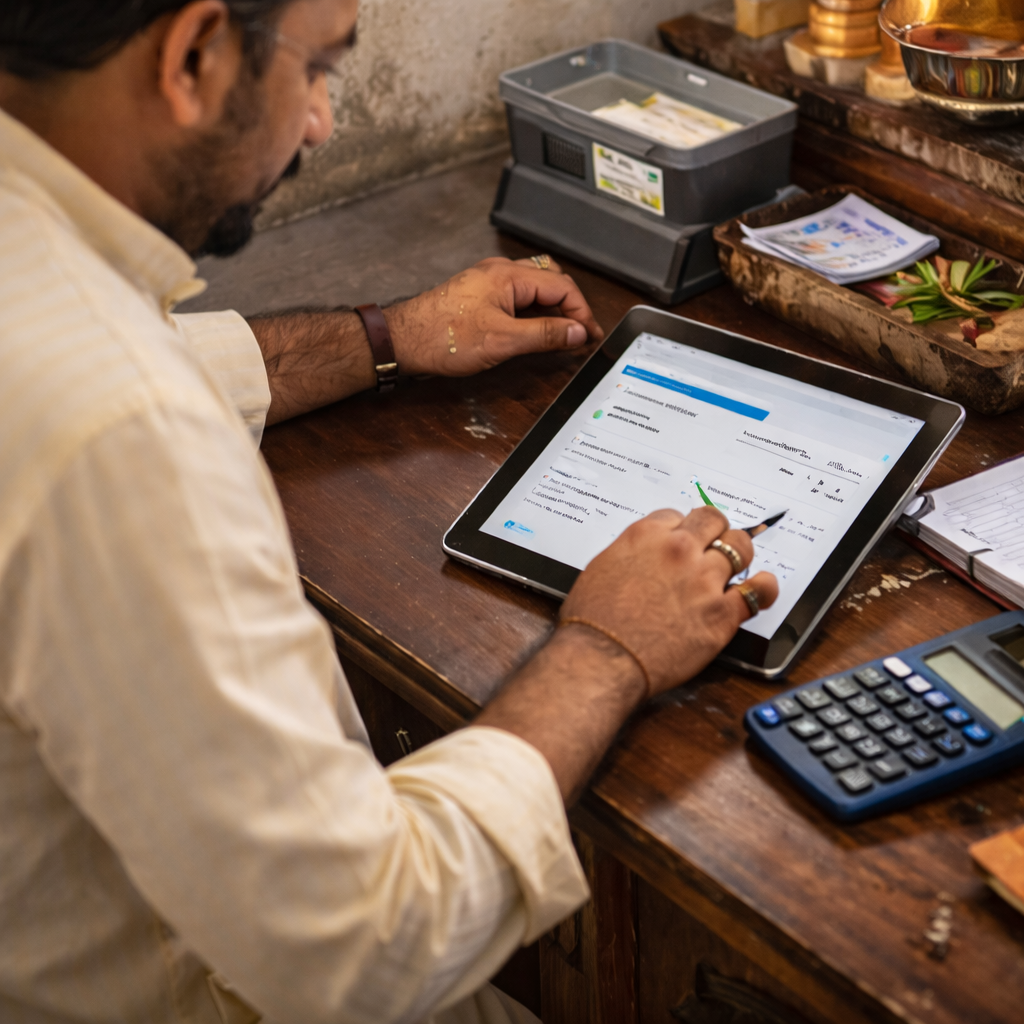
Devadhwani provides a structured, temple-centric administrative system aligned with traditional practices. A Super Administrator can assign role-based access to managers and staff, ensuring clarity and accountability. Pooja bookings are handled at the temple office, supporting one-time, monthly, and yearly rituals with automatic schedule tracking. Integrated WhatsApp communication delivers confirmations, reminders, and updates without requiring apps or logins. The platform also simplifies daily expense tracking and generates clear, reliable reports for temple authorities, enabling transparent and efficient management without disrupting established rituals.
Current Status
Why Devadhwani Matters to Prajnja
Devadhwani embodies Prajnja’s core belief that technology should empower people rather than replace them, and that tradition and modern systems can evolve together with mutual respect. It reflects a commitment to building software with empathy—designed to reduce burden, enhance clarity, and preserve the dignity of long-standing practices. Devadhwani is not merely a product; it is Prajnja’s vision translated into purposeful action.
An Invitation
Details & Info
Devadhwani is a temple administration and operations support platform developed by Prajnja with a clear purpose: to strengthen temple management through respectful, minimal, and thoughtful technology—without disturbing sacred traditions or increasing the burden on temple staff. Conceived as a response to real operational challenges rather than as a commercial product, Devadhwani addresses the growing difficulty temples face in managing pooja bookings, recurring rituals, devotee communication, expenses, and reporting through manual, time-intensive systems.
Built on a **temple-first design**, each temple is registered as a single authoritative entity, managed through one official mobile number acting as the Super Administrator. Role-based access allows temple managers and staff to operate with clarity and accountability. Pooja bookings continue through the traditional in-person model, while the system supports one-time, monthly, and yearly poojas with automatic schedule tracking, removing reliance on memory and paper registers.
Devadhwani integrates WhatsApp communication to send booking confirmations, reminders, and updates without requiring devotees to install apps or create accounts. It also supports pooja completion notifications, internal expense tracking, and simple cash-flow summaries. Auto-generated reports provide temple authorities and committees with clear insights into operations, income, and expenses.
Currently in active real-world testing, Devadhwani continues to evolve through direct administrative feedback. At its core, the platform reflects Prajnja’s belief that technology should support people—not replace them—and that tradition and modern systems can coexist with dignity. Devadhwani is not about digitising devotion; it is about supporting those who manage devotion every day.